May 6, 2026
What to Wear for Headshots in Austin: Complete Guide
Your headshot is doing a job 24 hours a day. On LinkedIn. On your company website. On speaker bios, press pages, email signatures, and whatever platform comes next. It introduces you before you say a word. and what you wear in that image is doing real communicative work.
Getting your outfit right isn't about fashion. It's about making sure that image says what you want it to say.
Here's how to approach it.
Start with Your Brand, Not Your Wardrobe
Before you open your closet, ask yourself one question: What do I want someone to feel about me before we've ever met?
Trustworthy and established? Polished and approachable? Creative and authoritative? Sharp and unconventional?
The answer shapes everything else. color, fit, neckline, accessories. Outfit choices in headshots aren't random. They're signals. The most effective headshots are the ones where the outfit amplifies what's already true about the person wearing it, rather than contradicting or distracting from it.
Colors That Work
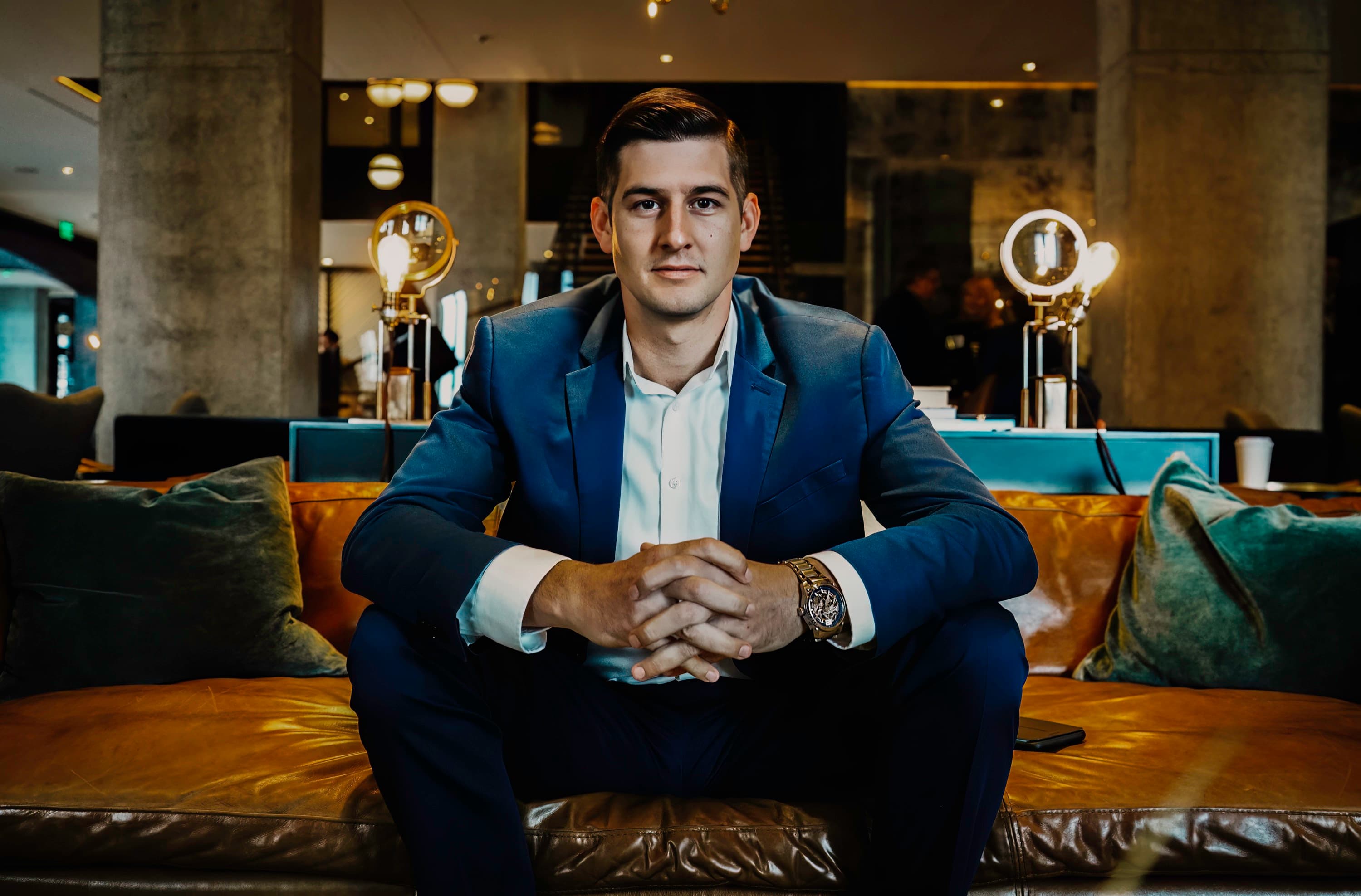
Deep solids are almost universally strong. Navy, burgundy, hunter green, charcoal, slate blue, deep plum. these saturated colors photograph crisply, hold detail well, and complement a wide range of skin tones.
Jewel tones are particularly reliable. Sapphire, emerald, deep teal. they look intentional without being flashy.
Neutrals work, with caveats. Grey, taupe, and camel are clean and professional. Avoid very light neutrals (cream, pale yellow, light grey). they can wash out the image depending on your skin tone and the background.
Avoid pure white as a primary top. White shirts and blouses reflect studio lighting back at the camera, creating overexposure around your face. Off-white, ivory, or white under a blazer is fine.
Black is polarizing. It reads as authoritative and strong, but it can also feel heavy depending on the context. If black is genuinely part of your aesthetic and brand, wear it. If you're reaching for it just because it feels safe, consider whether it actually represents you.
Patterns and Prints
Simple rule: avoid them, or use them very deliberately.
Thin stripes and tight patterns create a visual interference effect (called moiré) on digital cameras. Busy florals, large graphics, and heavy plaids pull the eye away from your face. which is the entire point of a headshot.
If you love pattern, try a subtle texture instead: a fine herringbone blazer, a softly textured knit, a woven fabric with dimension. These read on camera as interesting without competing with your face.
Fit and Fabric
Fit matters more than brand. A well-fitted $40 blazer will photograph better than an expensive one that doesn't sit right on your shoulders. Clothing that bunches at the collar, gaps at the buttons, or pulls across the back is immediately visible in images.
Before your session, put on your outfit options and sit down in front of a mirror. the way you'd sit at a desk or in an interview. Check for bunching, gaping, or collars that don't lay flat. That's what the camera will see.
Fabric recommendations:
- Blazers and structured jackets: Almost universally flattering. They add polish and visual weight without bulk.
- Knits: Soft and approachable. Works for creative professionals, consultants, coaches.
- Crisp cotton or poplin: Clean and professional. Great for conservative industries.
- Silk and satin: Beautiful in person, but can be tricky on camera. they reflect light and can create unexpected highlights. Matte fabrics are more forgiving.
Necklines
Your neckline frames your face. it's worth thinking about.
V-necks are universally flattering in headshots. They draw the eye upward and lengthen the neck.
Crew necks are clean and professional, especially under a blazer.
High necklines and turtlenecks work well if that's part of your aesthetic, but can compress the visual space between your face and shoulders.
Avoid strapless or very low-cut tops for professional headshots. not because of modesty, but because the image loses its grounding without the clothing providing structural context.
Accessories
Less is more.
Jewelry should enhance, not distract. Small earrings, a simple pendant, a watch. these add dimension. Large statement pieces, multiple necklace layers, or anything that catches light dramatically can pull focus.
Glasses: wear them if you wear them in real life. We'll account for reflection in lighting setup.
Bring More Than You Think You Need
Most clients bring 2–3 looks to their session, and that's exactly right. Different combinations serve different contexts. your LinkedIn profile, your firm's website, your speaking bio all have different audiences and tones.
When you arrive, we'll look at your options together and make decisions based on the day's lighting setup, your coloring, and what we're going for. Sometimes what looks perfect in your closet is even better in the studio. Sometimes one small swap. a different blazer, an open collar. makes everything click.
That's the conversation we'll have on the day.
One More Thing: Hair & Makeup
Every headshot session at Samantha Haines Photography includes professional hair and makeup. This isn't optional or extra. it's built in, because it fundamentally changes the outcome.
Studio lighting is more revealing than natural light. Professional makeup accounts for that. it's applied for the camera, not the mirror, which means it looks natural and polished in the final images rather than overdone in person.
Come with clean skin and hair washed the night before (not the morning of), and we'll take it from there.
Your headshot represents you when you're not in the room. Let's make sure it's doing its job.
Samantha Haines
Austin-based portrait photographer specializing in boudoir, senior portraits, family, newborn, maternity, and headshots. Samantha has photographed thousands of clients across the Austin area and brings warmth, artistry, and intention to every session.